
How Construction 3D Printing Works
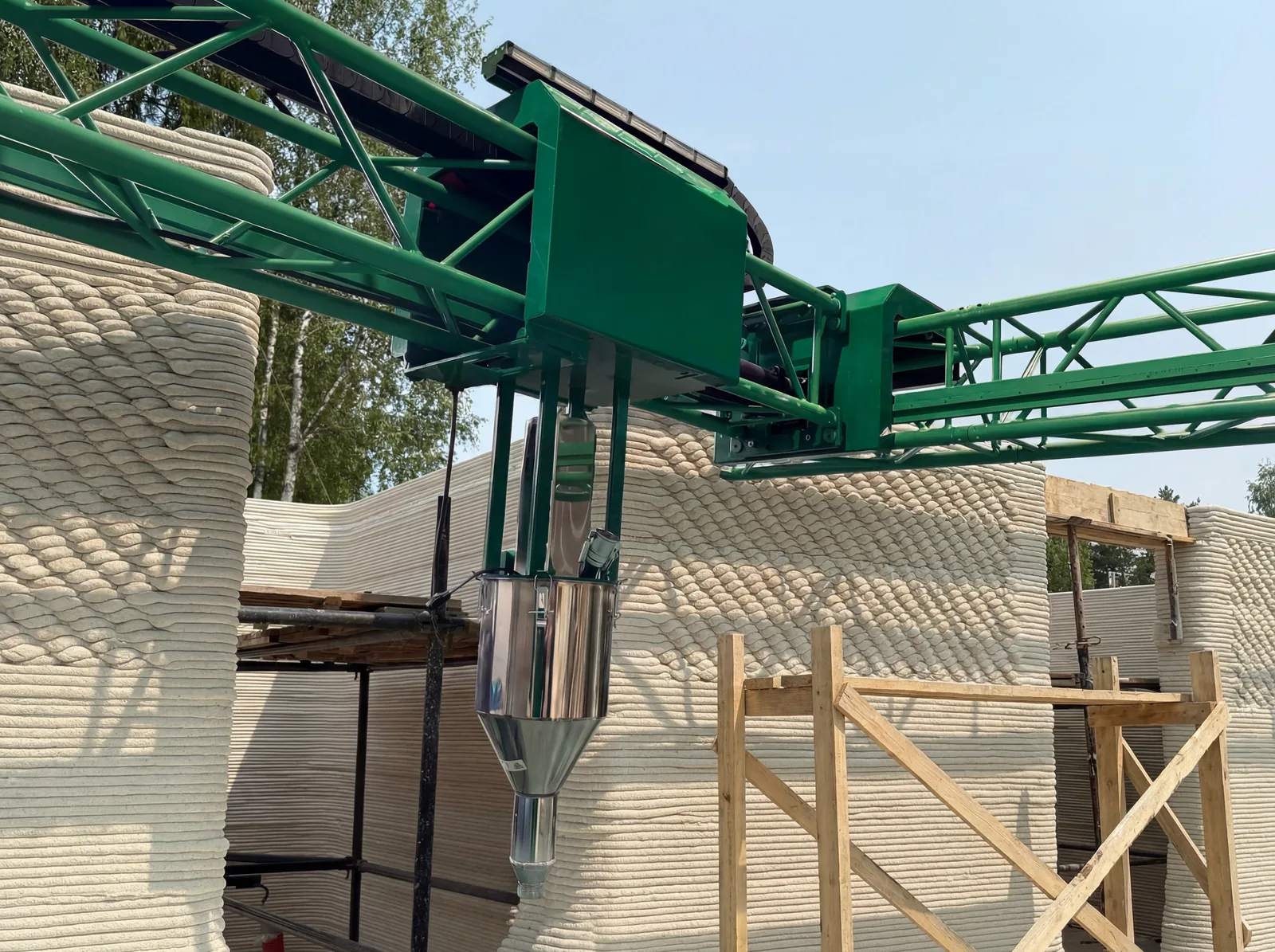
Construction 3D printing is a digitally controlled production process in which a machine deposits a printable cement-based mixture in successive layers. The process can be used for wall systems, architectural concrete, prefabricated components, molds, landscape products, and other forms that are suitable for the selected equipment and material workflow.
The printer is only one part of the operation. A successful project connects digital design, structural engineering, material qualification, reinforcement, equipment positioning, mixing and pumping, toolpath preparation, quality control, permits, safety, and conventional construction work.
1. Define the application before selecting equipment
The process begins by defining what the customer intends to produce. A printer selected for mobile residential wall production may be very different from a large gantry system or a factory machine used for repeatable precast components.
Important starting information includes the maximum product or building dimensions, required height, site or factory environment, access, relocation requirements, production rate, available power, material resources, and the customer’s engineering and operating capabilities.
AMTG organizes its equipment into mobile robotic R-Series systems, modular gantry G-Series platforms, and factory-focused F-Series machines. Compare the full construction 3D printer range.
2. Prepare the digital model
The customer’s architectural or product geometry must be reviewed for the selected printing process. Not every shape that can be modeled digitally is automatically practical to print. Wall thickness, curves, openings, transitions, unsupported geometry, layer dimensions, reinforcement, interfaces with conventional components, and the construction sequence all affect print preparation.
For buildings, the digital model must remain coordinated with the work of architects, structural engineers, material specialists, contractors, and local approving authorities. The printing file does not replace engineered construction documents.
3. Convert geometry into layers and toolpaths
Prepared geometry is divided into layers and converted into machine paths. The toolpath defines where the print head moves, how walls and features are sequenced, where printing starts and stops, and how the machine handles corners, curves, openings, and transitions.
Toolpath preparation must be coordinated with the machine’s working envelope and motion system. It also affects material flow, print speed, layer height and width, hose movement, operator access, and the time available between successive layers.
AMTG can assist customers with checking geometry and preparing files for the selected equipment. Final architectural design, structural calculations, reinforcement, code compliance, and construction decisions remain the responsibility of the customer and its qualified professionals.
4. Install and position the printing system
Equipment setup depends on the platform. A modular gantry printer is assembled and aligned around or above a defined working area. A mobile robotic system is positioned and may be repositioned according to the approved production plan. A factory system is integrated with the production floor, material handling, and product movement.
Before printing, the team verifies the machine position, working envelope, foundations or production surface, power, material-delivery route, control system, safety zones, access, and the relationship between digital coordinates and the physical work area.
5. Prepare and deliver the printable material
The mixing and pumping process must supply a consistent printable cement-based material to the print head. The material must be pumpable through the delivery system, extrude in a controlled bead, bond with adjacent layers, and retain sufficient shape after placement.
Material behavior is affected by formulation, water content, mixing sequence, temperature, humidity, transport distance, pump settings, hose configuration, print speed, and delays. Testing and quality procedures must be developed for the actual material, equipment, environment, and intended application.
An AMTG equipment package includes a synchronized mixer and material pump and a power generator configured for the supplied system. See our guide to concrete 3D printer equipment and workflow and the detailed article on concrete mixing and pumping for construction 3D printing.
6. Deposit material layer by layer
During printing, the control system moves the print head along the prepared path while the material-delivery system supplies the required flow. Each layer is placed on the previous layer to develop the planned geometry.
Operators monitor bead geometry, layer consistency, material supply, pump pressure, hose movement, machine motion, environmental conditions, and the relationship between actual production and the approved file. Adjustments must remain within the project’s qualified process and technical requirements.
7. Coordinate reinforcement, openings and conventional work
Construction printing usually operates alongside conventional building systems. Reinforcement, structural connections, lintels, embedded items, openings, utilities, insulation, waterproofing, roofing, windows, doors, finishes, and inspections must be coordinated with the printed geometry and construction sequence.
The printer does not independently complete an entire finished building. For residential applications, review the more detailed 3D house printer systems guide.
8. Inspect, document and complete the project
The customer’s project team is responsible for the required inspections, material records, quality checks, structural verification, curing procedures, dimensional control, code compliance, and acceptance of the completed work. Printed elements are then integrated with the remaining construction or manufacturing operations.
Completed examples in the AMTG customer project portfolio demonstrate how equipment owners have combined construction printing with conventional trades. These projects were independently managed and constructed by AMTG customers.
Gantry, robotic and factory printing systems
Gantry construction 3D printers
Gantry systems use Cartesian motion within a defined working envelope. They are suited to long walls, larger footprints, repeated paths, and coordinated on-site printing. The Mella shopping center demonstrates commercial-scale production using three synchronized AMTG G2 systems.
Mobile robotic construction printers
Robotic systems use multi-axis motion and mobile platforms. The AMTG R-Series comparison explains the difference between road-mobile R1 and tracked R2 deployment.
Factory construction printing systems
Factory-focused printers operate in controlled production environments for architectural elements, prefabricated components, molds, landscape products, and repeatable concrete products. Explore the AMTG F2 and F2X.
What AMTG provides
- Construction 3D printing equipment selected for the intended application
- Synchronized mixer and material pump according to the agreed package
- Power generator configured for the supplied equipment
- Foam-concrete production unit for preparing foam concrete used to fill cavities between printed wall shells
- Installation and commissioning support
- Operator preparation and workflow guidance
- Assistance with checking and preparing digital files for printing
- Technical consultations under the agreed support terms
- Access to experience shared within the AMTG equipment-owner community
AMTG manufactures and supplies equipment and supports the technical printing workflow. AMTG does not act as the builder or general contractor for customer projects. Product specifications, availability, manufacturing location, certifications, delivery, warranty, and support obligations are confirmed in the applicable written quotation and contract.
Start with an application review
Send the intended product or structure, approximate dimensions, operating location, site or factory conditions, material constraints, production goals, and available drawings or 3D models. AMTG can then review the application and recommend the next technical and commercial steps.
Comments are closed.